Educational Disclaimer
All information and product details on this website are shared for educational and research purposes only.
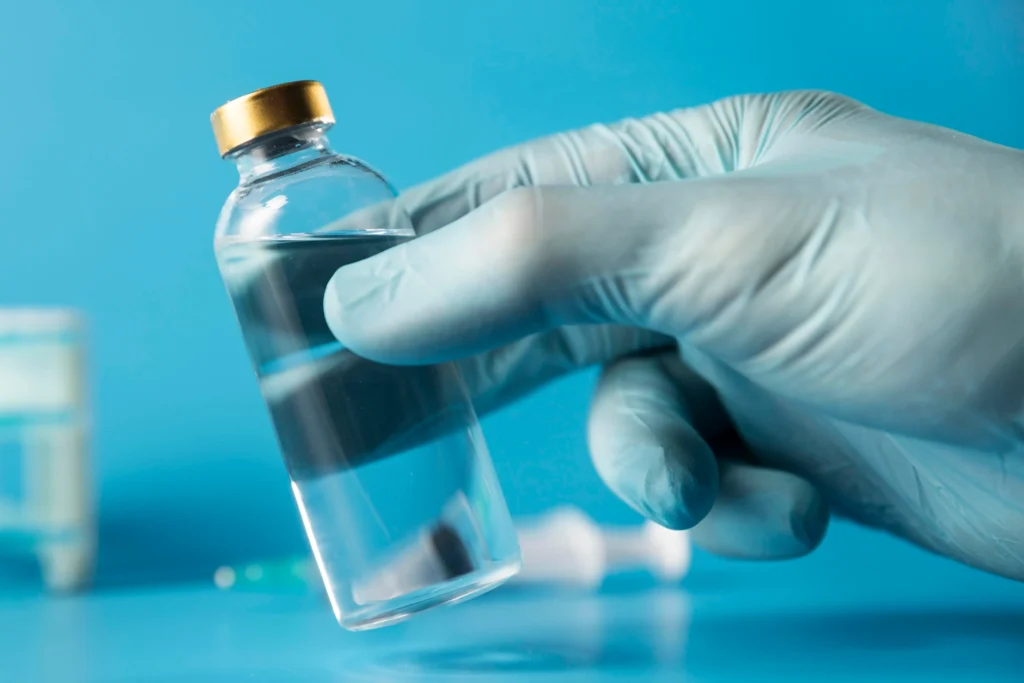
Products available at VeraLabs are strictly intended for in vitro laboratory research. The term in vitro refers to experiments conducted outside living organisms, such as in test tubes or controlled lab environments.
These compounds:
- Are not FDA-approved
- Are not pharmaceutical products
- Must not be used for human or animal consumption
Any misuse for medical or therapeutic purposes is strictly prohibited.
Why Proper Peptide Storage Is Important
Peptides are highly sensitive molecules. Their structure and biological activity can easily be affected by environmental conditions such as temperature, moisture, and oxygen exposure.
Improper storage may lead to:
- Molecular breakdown (degradation)
- Oxidation reactions
- Aggregation or loss of activity
To preserve their integrity, peptides must be stored under carefully controlled conditions.
Common Peptide Storage Methods
There are two widely used approaches depending on how the peptide will be used:
1. Dry (Solid-State) Storage
In this method, peptides are stored as a lyophilized (freeze-dried) powder.
Benefits:
- Higher stability
- Reduced exposure to moisture
- Longer shelf life
This is the most preferred method for long-term storage.
2. Liquid (Solution) Storage
Peptides are dissolved in suitable solvents for immediate or short-term use.
Best for:
- Ready-to-use applications
- Short-term experiments
However, liquid peptides are more sensitive and require stricter handling.
Key Factors for Safe Peptide Storage
1. Protection from Oxidation
Certain amino acids in peptides are prone to reacting with oxygen, which can damage the molecule.
Best practices:
- Use airtight containers
- Reduce air exposure as much as possible
- Fill storage containers properly to minimize oxygen inside
- Use inert gas (advanced labs) if needed
2. Avoiding Moisture Contamination
Water is one of the biggest threats to peptide stability. It can trigger chemical breakdown and even microbial growth.
For dry peptides:
- Store in low-humidity environments (below 40%)
- Use sealed containers with desiccants
For liquid peptides:
- Use dry, clean solvents
- Ensure containers are moisture-free before use
3. Temperature Control
Temperature plays a critical role in maintaining peptide stability.
Recommended conditions:
- Dry peptides: Store at -20°C or -80°C for long-term stability
- Liquid peptides:
- Short-term: 4°C (refrigerated)
- Long-term: -20°C or lower
⚠️ Avoid repeated freeze-thaw cycles, as they can damage peptide structure.
Tip: Divide solutions into small portions (aliquots) to prevent repeated thawing.
Choosing the Right Storage Containers
Selecting proper containers is just as important as storage conditions.
Glass Containers
- Chemically stable and non-reactive
- Ideal for sensitive peptides
- Handle carefully to avoid breakage
Plastic Containers
- Lightweight and durable
- May cause peptide adsorption at low concentrations
👉 Use low-binding (low-adsorption) plastic containers when necessary.
Sealing Matters
Always use airtight containers such as:
- Screw-cap vials
- Cryovials with sealing rings
This helps protect peptides from:
- Air exposure
- Moisture
- Contamination
General Storage Guidelines (Quick Checklist)
Follow these essential rules to maintain peptide quality:
- Store dry peptides in cold, dry, and dark conditions
- Keep humidity levels low (≤40%)
- Refrigerate or freeze liquid peptides based on duration
- Avoid repeated freeze-thaw cycles
- Limit exposure to air during handling
- Use tightly sealed containers with minimal air space
- Protect light-sensitive peptides using opaque containers or foil
Final Thoughts
Proper storage is essential to maintain the stability, purity, and research reliability of peptides. Whether stored as a dry powder or in solution, following correct handling and environmental controls ensures consistent results in laboratory applications.
Browse our solubilization medium and research compounds, packaged with care and shipped within the US.